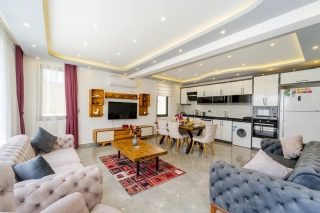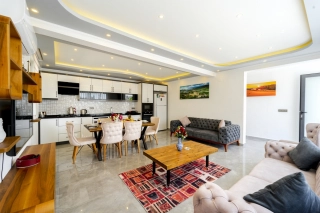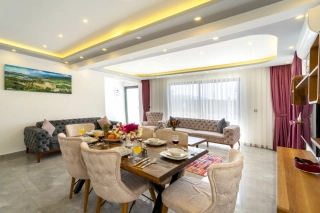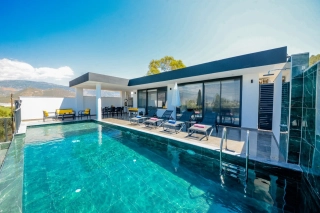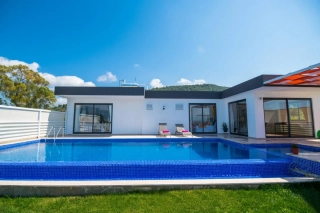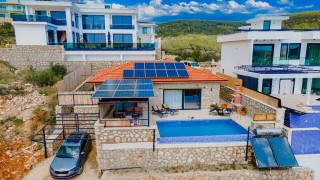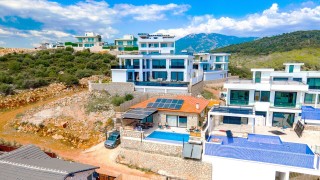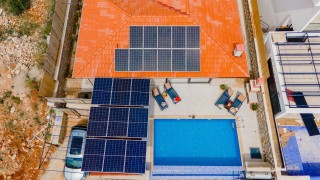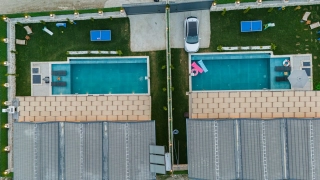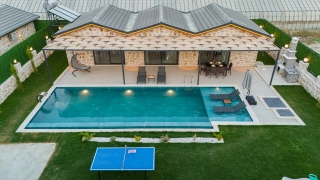
Patara Villas for Rent
-
2027 Updated Prices
-
2026 Updated Prices
-
2026 Updated Prices
-
2026 Updated Prices
-
2026 Updated Prices
-
2026 Updated PricesSauna
-
2026 Updated Prices
-
2026 Updated PricesSauna
-
2026 Prices is Updated
-
2026 Updated Prices
-
2026 Updated Prices
-
2026 Prices Updated

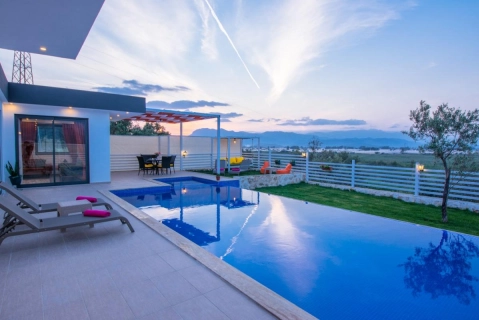
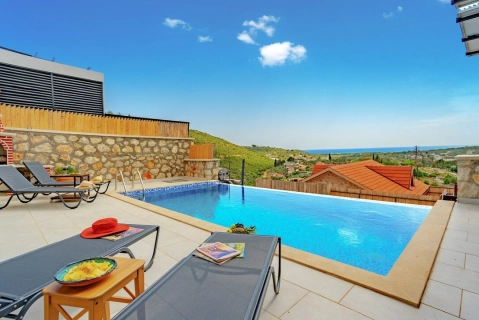


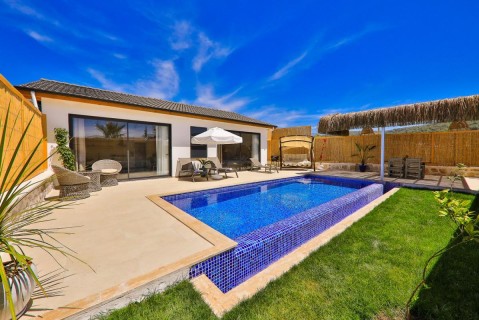
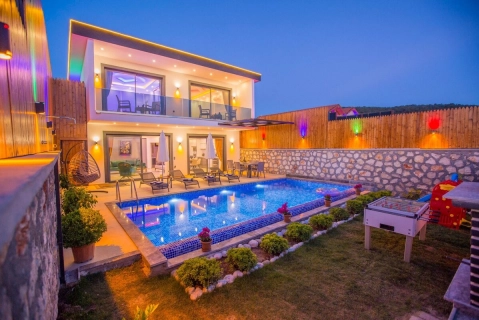
The ancient city of Patara is located in the present-day Ovagelemiş Village, at the southwestern end of the Xanthos Valley, between Fethiye and Kalkan, and is one of the most important and oldest cities of Lycia. Excavations at Patara, which have been ongoing since 1988 by Prof. Dr. Fahri Işık and his team from Akdeniz University, are significant not only for their archaeological and historical value but also because it is one of the rare beaches where Mediterranean sea turtles (Caretta-Caretta) have laid their eggs and hatched their young for millions of years.
History of the Ancient City of Patara
The city’s name appears as Patar in Hittite texts dating back to the 13th century BC. Ceramic fragments found at the Tepecik Acropolis exhibit characteristics of the Middle Bronze Age, while a stone axe unearthed on the eastern slope of Tepecik, dating to the pre-Iron Age, demonstrates just how far back Patara’s history goes. Patara, which maintained its importance throughout history due to being the only place in the Xanthos valley that had access to the sea, is referred to as Patara in the Lycian language in inscriptions and coins. With its entry into Ptolemaic rule in the 3rd century BC, Patara became the leading city of Lycia. At the beginning of the 2nd century BC, with Lycia coming under the control of the Seleucid Kingdom, Patara was considered the capital of Lycia. This situation was formalized in 167/68 BC, when Patara gained its autonomy against Rome and its independence against Rhodes, becoming the capital of the Lycian League. Monumental structures such as the Assembly Building and the Theater, built in the capital during the Hellenistic period, parallel this historical process. Even after coming under Roman rule, Patara did not lose its importance; it served as a center for the judicial affairs of Roman governorships and also maintained its importance as a naval base connecting Rome with its eastern provinces. In 43 AD, Lycia became a Roman province, and in 74 AD, Lycia and Pamphylia were united into a single province, with Patara continuing as its capital. Known as an important oracle center of Apollo, Patara was also a port where grains transported from Anatolia to Rome were stored and kept. Maintaining its importance during the Byzantine period, the city became a significant center for Christians. Saint Nicholas, known as "Santa Claus," was from Patara. Furthermore, St. Paul boarded a ship from Patara to travel to Rome. The fact that Bishop Eudemos, the sole signatory of Lycia at the Council of Nicaea in 325 AD, presided over by Emperor Constantine, was the Bishop of Patara, is evidence of the city’s prominence during this period. Maintaining its importance throughout the Middle Ages, Patara has survived to the present day as an important center even after the arrival of the Turks. Entry to the present-day ruins is through a magnificent and very well-preserved Roman triumphal arch. It is understood from inscriptions that it was built in the name of the regional governor around 100 AD. A cemetery area containing Lycian-type sarcophagi stretches along the slopes of the hill to the west of the theater. The theater, situated on Kurşunlu Hill at the southernmost tip of the city, was rebuilt in 147 AD after an earthquake, according to inscriptions. Kurşunlu Hill, where the theater is situated, offers the best view of the city. From here, other remains of the city; the Vespasian Baths, the Corinthian Temple, the main street, the harbor, and the granary can be easily observed. The granary (granarium) behind the marsh to the northwest of the hill is one of Patara’s monumental structures that remains today, built by Emperor Hadrian and his wife Sabina in the 2nd century AD. To the north of the theater is the Parliament Building, where Patara, the capital of the Lycian League, hosted meetings. The city’s water was brought from a rocky outcrop on the slopes of Kızıltepe, near the village of İslamlar, approximately 20 km to the northeast. Between the source and the city, north of the Fırnaz pier, lies the most monumental section of the waterways, known locally as "Delik Kemer" (Hole Arch).
Patara boasts a magnificent coastline stretching approximately 15 km. The longest beach in the region, Patara Beach is captivating with its fine sand. The shallow sea makes it ideal for those who aren’t very good swimmers.
Due to its kilometers of fine sand, the beach also resembles a desert. This is why Patara Beach was frequently used in Yeşilçam films to depict desert scenes. It is also stated in various sources that Saint Nicholas, considered holy by Christians, was from Patara. Take your freedom and set sail for Patara to enjoy a perfect seaside experience alongside the historical city where you can breathe in the atmosphere of the ancient world.
Kalkan Villa
- Merkez: Kalkan Mah. Yayla Cad. No : 8 A
Kaş, Antalya - Şube: Veliefendi Hipodromu Yanı, The Istanbul Residence B Blok 59/1 No:16
Bakırköy / İSTANBUL - KALKAN VILLA LTD
Tour Operator registered in England under company number 15412441.
90 Western Road, Brighton, England, BN1 2LB. - +90 532 736 93 83
- +90 532 061 23 44
- +90 242 844 3 777
- +90 212 801 40 56
- +44 7309 680002
- info@kalkanvilla.org
- Public Relations Kalkan Turizm Seyahat Acentası - Belge No: 13010
Corporate
Villa Features
- Villa with Seaview
- Honeymoon Villa
- Luxury Villa
- Villa Near The Sea
- Secluded Villa
- Pool Heated Villa
- Economic Villas and Apartments for Rent
- Rental Apartments
- 2026 Villas
- Private Garden Villas
- Luxury Honeymoon Villas
- Villas with Sauna
- Honeymoon Villas with Sea View
- Villas with kiddy pool
- Pet Friendly Villas
- Villas with Video
- Villas Fully Payable by Credit Card
- Villas with Breakfast